
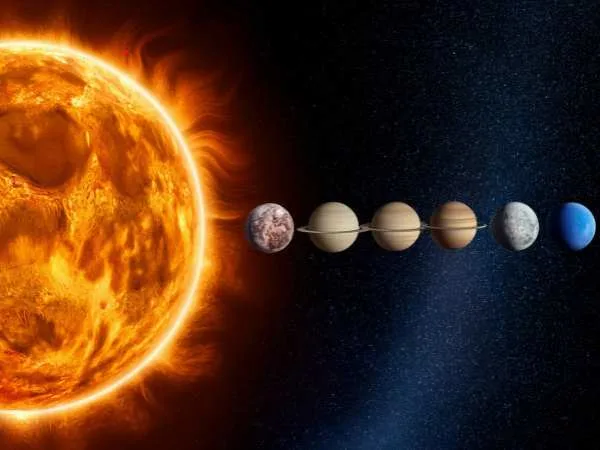
The question the planet closer to the sun sounds simple. It feels like something everyone should know. Yet people argue about it constantly. Some mix it up with Earth distance. Others confuse speed with closeness. A few even think the answer changes depending on the season.
It doesn’t.
There is one planet that stays closest to the Sun on average. That planet is Mercury. Always has been. Always will be, unless the solar system changes in a way that would cause far bigger problems than a trivia mistake.
Still, the confusion keeps coming back. This blog breaks it down fully. We’ll explain the planet closer to the sun meaning, why Mercury is the closest planet to the sun, whether Mercury is the smallest planet, which planet comes second, which planet is closest to Earth (and why that answer surprises people), and why these questions never seem to go away.
The Planet Closer to the Sun Meaning
When people ask about the planet closer to the sun meaning, they’re usually asking one of two things without realizing it.
Some mean:
- Which planet orbits nearest to the Sun on average
Others mean:
- Which planet is closest to the Sun at a specific moment
Astronomy uses averages, not moments. Planets move. Orbits stretch. Distances change every second. To avoid chaos, scientists define “closest” using average orbital distance.
By that definition, Mercury is the planet closer to the Sun.
also read – What Languages Do the Philippines Speak? A Deep Look at the Country’s 170+ Languages
Mercury Is the Closest Planet to the Sun
This part is not debated in astronomy.
Mercury is the closest planet to the sun. Its average distance from the Sun is about 58 million kilometers. No other planet comes closer over the long term.
Even when Mercury swings farther out in its orbit, it still remains closer to the Sun on average than any other planet.
That average matters more than snapshots.
Why Mercury’s Orbit Creates Confusion
Mercury does not move in a perfect circle. Its orbit is highly elliptical. That means sometimes it gets much closer to the Sun, and sometimes it moves farther away.
At its closest point, Mercury is extremely near the Sun. At its farthest, it can appear farther away than Venus ever gets at its closest.
This visual overlap fuels confusion. Average distance clears it up.
Which Planet Is Closest to the Sun and Which Farthest
This question shows up exactly as written: which planet is closest to the Sun and which farthest.
The closest planet to the Sun is Mercury.
The farthest recognized planet from the Sun is Neptune.
Pluto no longer counts as a planet under modern classification, so it does not enter this comparison.
Mercury and Neptune sit at opposite ends of the planetary system.
What Is the Second Closest Planet to the Sun
Once Mercury gets named, people ask the next one.
What is the second closest planet to the Sun is an easy follow-up.
The answer is Venus.
Venus orbits farther from the Sun than Mercury but closer than Earth. Its average distance is about 108 million kilometers.
Mercury first. Venus second. Earth third.
Why People Mix Up Mercury and Venus
Venus looks brighter in the sky. It’s visible near sunrise and sunset. Mercury appears briefly and stays close to the Sun’s glare.
Brightness tricks the brain. People associate visibility with proximity.
In space, brightness has nothing to do with distance from the Sun.
Is Mercury the Smallest Planet
Yes. Is Mercury the smallest planet has a clear answer.
Mercury is the smallest planet in the solar system. It has:
- The smallest diameter
- The lowest mass
- The weakest gravity among planets
Pluto is smaller, but Pluto is no longer classified as a planet.
So among planets, Mercury is the smallest.
Why Being Small Matters for Mercury
Mercury’s small size affects everything about it.
It has:
- Very little atmosphere
- Extreme temperature swings
- No weather like Earth
- No protection from solar radiation
Size influences how a planet evolves. Mercury cooled quickly. Its surface locked into an ancient state.
Mercury’s Distance vs Heat Misconception
People assume the closest planet to the Sun must be the hottest. That sounds logical. It’s also wrong.
Venus is hotter than Mercury.
Venus traps heat due to its thick atmosphere. Mercury has almost no atmosphere, so heat escapes easily.
Distance alone does not control temperature.
Why Mercury Isn’t the Hottest Planet
Despite being closest, Mercury’s surface temperature swings wildly. Daytime temperatures soar. Nighttime temperatures plunge.
Without an atmosphere to hold heat, Mercury cannot stabilize its temperature.
Venus, farther from the Sun, cooks continuously under a dense atmosphere.
also read : – How to Draw Canines : A Simple Guide for Beginners
Which Planet Is Closest to the Earth
This question causes the most arguments.
Which planet is closest to the Earth sounds like it should be Venus or Mars. That answer depends on timing. At specific moments, Venus or Mars can come closer than Mercury.
But on average, Mercury is actually the closest planet to Earth.
This result surprises many people.
Why Mercury Is Closest to Earth on Average
Mercury orbits closer to the Sun. Earth orbits farther out. Over time, Mercury spends more time nearer to Earth than other planets do.
Venus and Mars swing far away during parts of their orbits. Mercury stays relatively near Earth across the year.
Average distance, again, matters.
Why “Closest to Earth” Depends on Definition
If you ask:
- Which planet comes closest at one moment → Venus or Mars
- Which planet is closest over time → Mercury
Most people mean the first without saying it. Science usually answers the second.
Language causes confusion.
Mercury’s Speed Around the Sun
Mercury moves fast. It completes one orbit in just 88 Earth days. That speed creates frequent alignments with Earth.
More alignments mean more time spent relatively close.
Speed matters.
Why Mercury Looks So Boring in Pictures
Mercury’s surface looks gray and cratered. People dismiss it visually.
But its simplicity hides complexity. Its geology shows extreme compression. Its surface shrank as the planet cooled.
Small planets tell big stories.
Why Mercury Has No Rings or Moons
Mercury’s weak gravity struggles to hold onto companions. Any moon would likely escape or crash.
Its proximity to the Sun also disrupts stable orbits.
Being closest has consequences.
Why Mercury Has Such Extreme Days and Nights
Mercury rotates slowly. One day-night cycle lasts longer than its year.
That slow spin combined with solar proximity creates:
- Long scorching days
- Long freezing nights
Life as we know it would not survive.
Mercury’s Place in Solar System History
Mercury formed early. Its surface preserves ancient impacts.
Studying Mercury helps scientists understand:
- Early solar system collisions
- Planetary cooling
- Core formation
Closeness to the Sun shaped its fate.
Why the Inner Planets Get Compared So Often
Mercury, Venus, Earth, and Mars are called the inner planets. They share rocky composition.
Comparisons help scientists isolate variables like:
- Distance
- Atmosphere
- Size
Mercury serves as the extreme baseline.
Common Myths About Mercury Being Closest
Several myths persist.
- Mercury is not always the hottest
- Mercury does not get pulled into the Sun
- Mercury’s orbit is stable
- Mercury does not explode or burn up
Its position is steady over astronomical time.
Why Students Keep Getting This Question Wrong
Students confuse:
- Brightness with distance
- Heat with proximity
- Visibility with importance
Teaching averages instead of moments solves most errors.
Why Mercury Matters Despite Being Small
Mercury lacks glamour. No rings. No clouds. No color.
But it holds clues about planetary formation near stars. Many exoplanets resemble Mercury-like worlds.
Understanding Mercury helps explain other systems.
Mercury Compared to Other Planets by Distance
Here’s the clean order from the Sun outward:
- Mercury
- Venus
- Earth
- Mars
- Jupiter
- Saturn
- Uranus
- Neptune
That order never changes.
Why Distance Questions Cause So Much Debate
Humans think in snapshots. Space works in motion.
Astronomy prefers averages. Social media prefers moments.
That mismatch fuels arguments.
How Mercury Stays in Orbit Safely
The Sun’s gravity holds Mercury tightly. Its speed balances attraction.
That balance keeps Mercury stable, not doomed.
Closest does not mean falling.
Why Mercury Won’t Be the Closest Forever
On very long timescales, planetary orbits shift slightly. But not enough to change rankings anytime soon.
Mercury’s place is secure for billions of years.
FAQs
Mercury is the closest planet to the sun
Yes, based on average orbital distance.
What is the second closest planet to the Sun
Venus.
Is Mercury the smallest planet
Yes, among the eight planets.
Which planet is closest to the Earth
On average, Mercury.
Which planet is closest to the Sun and which farthest
Mercury is closest. Neptune is farthest.
Final Words
The answer to the planet closer to the sun is simple, even if arguments make it feel complicated. Mercury holds that position by every scientific measure that matters. Confusion comes from mixing moments with averages and brightness with distance. Once those ideas separate, the picture clears fast. Mercury may be small, gray, and quiet, but it owns the spot nearest the Sun—and it’s not giving it up.