
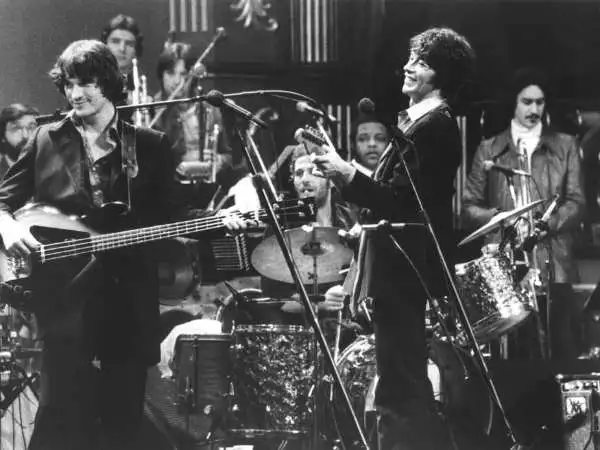
When people search the band robbie robertson, they’re not just looking for a discography or a timeline. They’re trying to understand a tension that shaped one of the most important groups in American music. The Band sounded communal, rooted, almost ancient. But inside that sound lived ego, authorship fights, exhaustion, and creative imbalance. At the center of all of it stood Robbie Robertson.
Robbie Robertson didn’t just play in The Band. He wrote its spine. He shaped its mythology. And later, he walked away from it, leaving behind music that still feels carved out of American soil and a legacy that never stopped being argued over.
This is the full story. The songs. The films. The fights. The deaths. And what The Band became with—and without—Robbie Robertson.
Who Robbie Robertson Was Before The Band
Robbie Robertson was born in Toronto, Canada, in 1943. His early life split between two worlds. On one side, the city. On the other, the Six Nations Reserve, where he absorbed Indigenous stories, rhythms, and a sense of history that would later surface in his songwriting.
As a teenager, Robertson gravitated toward guitar, rock and roll, and American blues. He wasn’t just copying sounds. He was studying how music carried identity.
That curiosity pushed him toward the road early.
also read : – Songs by Mariah Carey: The Voice, the Hits, and the Moments That Stuck
How Robbie Robertson Joined What Became The Band
Before they were known as The Band, they were the Hawks, a backing group for rockabilly singer Ronnie Hawkins. Robertson joined as the youngest member, sharp, ambitious, and already thinking like a songwriter.
The group later became Bob Dylan’s electric backing band during Dylan’s controversial mid-1960s tours. Night after night, they were booed, shouted at, and challenged.
That pressure forged them.
When they stepped out on their own, they didn’t sound like the psychedelic bands of the era. They sounded older. Heavier. Rooted.
The Band Members and Robbie Robertson’s Role
The classic lineup included:
- Robbie Robertson – guitar, primary songwriter
- Levon Helm – drums, vocals
- Rick Danko – bass, vocals
- Richard Manuel – piano, vocals
- Garth Hudson – keyboards
People often ask the band members robbie robertson because his role wasn’t just instrumental. He wrote most of the lyrics and music. That decision—whether organic or contested—became the fault line that split the group emotionally.
While others sang lead vocals, Robertson held authorship.
That mattered.
also read : – Cast of Loudermilk, How the Characters Fit Together, and Why the Show Still Connects
The Band Songs Robbie Robertson Wrote and Shaped
Searching the band robbie robertson songs opens a door into modern Americana itself.
He wrote or co-wrote:
- “The Weight”
- “Up on Cripple Creek”
- “The Night They Drove Old Dixie Down”
- “Across the Great Divide”
- “Stage Fright”
These songs didn’t glorify history. They sat inside it. They told stories from perspectives rock music rarely touched at the time—laborers, soldiers, drifters, towns fading out.
Robertson wasn’t nostalgic. He was observational.
The Band Songs Robbie Robertson Sings
Another common search is the band songs robbie robertson sings. While Robertson wasn’t the primary lead singer, he did sing on key tracks, especially later in the band’s career.
His voice was restrained, almost reserved. That restraint fit his songwriting style. He didn’t perform emotion. He framed it.
That contrast made the shared vocals within The Band so powerful.
Why Authorship Became a Problem Inside The Band
As success grew, so did resentment. Royalties flowed mostly to Robertson because of songwriting credits. Levon Helm, in particular, publicly criticized this structure later in life, arguing that the music was more collaborative than the credits suggested.
Robertson countered that he brought finished songs to the group.
Both views can exist at once.
The tension wasn’t just about money. It was about identity and recognition.
also read : – Skymovies HD | Skymovies.hd | – To Get The Latest Links For Movies Download
The Band Movie and Robbie Robertson’s Cinematic Legacy
The phrase the band movie robbie robertson points directly to The Last Waltz.
Directed by Martin Scorsese, The Last Waltz documented The Band’s farewell concert in 1976. The film elevated the group into legend.
Robbie Robertson played a major role in shaping the event and its presentation. Some band members later felt the film centered him too strongly.
But there’s no denying its impact. It became the gold standard for concert films.
The Band Robbie Robertson Documentary Work
Beyond The Last Waltz, Robertson built a long relationship with Scorsese, contributing music and acting as a creative collaborator on multiple films.
This connection shifted Robertson’s career path. While others struggled, he moved deeper into film scoring and production.
That divergence widened the emotional gap between him and the rest of the group.
Why The Band Without Robbie Robertson Changed
People search the band without robbie robertson because the difference is audible.
After Robertson left, The Band reunited multiple times with various lineups. The sound remained competent, but something structural was missing.
The songs lacked the same narrative depth. The history felt thinner.
Songwriting matters. Direction matters.
The Band After Robbie Robertson: What Remained
The phrase the band after robbie robertson isn’t just chronological. It’s philosophical.
Without Robertson, the group leaned more heavily on performance than composition. The remaining members carried the legacy bravely, but the weight of loss—creative and personal—was heavy.
Tragedy followed.
The Band Robbie Robertson Death: Setting the Record Straight
There is often confusion around the band robbie robertson death.
Robbie Robertson did not die with The Band’s original era. He lived long after the group’s breakup and remained active creatively.
However, multiple other members of The Band passed away over the years, often under tragic circumstances. Those losses colored public memory and intensified the mythology.
Robertson himself died in 2023, at age 80, after a long illness.
His death marked the end of a chapter that had already been closing for decades.
Robbie Robertson’s Life After The Band
Post-Band, Robertson released solo albums that leaned into Indigenous themes, spirituality, and cinematic soundscapes.
He didn’t chase charts. He chased coherence.
His work with film allowed him to expand musically without the internal conflict that plagued The Band’s later years.
also read : – Moviespapa – Watch your favorite movies online
Why Robbie Robertson’s Legacy Is Still Debated
Some view Robertson as the architect. Others see him as distant, controlling, or overly polished.
Both readings exist because he was complex.
He was disciplined where others were chaotic. He was strategic where others were instinctual.
Those differences fueled brilliance—and resentment.
How The Band Changed Rock Music Forever
Regardless of internal conflict, The Band reshaped rock.
They:
- Brought Americana into the mainstream
- Blended folk, blues, country, and rock seamlessly
- Showed that restraint could be revolutionary
Robbie Robertson’s songwriting was central to that shift.
Why The Band Still Matters Today
New artists still cite The Band as influence. Their songs appear in films, series, and covers constantly.
They sound timeless because they avoided trends.
That wasn’t accidental.
also read : – Everything That You Should Know About Moviesflix
FAQs
Who was Robbie Robertson in The Band
He was the lead songwriter, guitarist, and creative director.
What songs did Robbie Robertson write for The Band
Major songs include “The Weight” and “The Night They Drove Old Dixie Down.”
What is The Last Waltz
A 1978 concert film documenting The Band’s farewell performance.
Did The Band continue without Robbie Robertson
Yes, but the sound and direction changed significantly.
When did Robbie Robertson die
He died in 2023 at age 80.
Final Words
The Band and Robbie Robertson created something rare: music that felt older than the people who made it and stronger than the conflicts that broke them apart. Robertson didn’t just write songs. He built worlds. Those worlds survived arguments, departures, and death itself. The debates will never fully settle—and that’s fitting. Because great music doesn’t come from harmony alone. It comes from friction, vision, and the courage to walk away when the story demands it.